
Introduction
A dental cap crown is a custom made restoration that covers and protects a damaged or weakened tooth, restoring its shape, strength, and appearance. Dentists commonly recommend crowns when a tooth is too compromised for a filling but can still be preserved.
In this guide, you will learn what a dental cap crown is used for, the dental crown procedure steps, when you may need one, how it compares with fillings, and what patients in Australia can expect in terms of cost and results.
What Is a Dental Cap Crown?
A dental cap crown is a tooth shaped covering placed over a prepared tooth. It is designed to:
-
Restore a broken or worn tooth
-
Strengthen a tooth after root canal treatment
-
Improve the appearance of discoloured or misshapen teeth
-
Protect teeth with large fillings
-
Support dental bridges
Crowns are commonly made from porcelain, ceramic, zirconia, metal alloys, or a combination of materials. Porcelain and zirconia crowns are especially popular in cosmetic dentistry because they closely resemble natural teeth.
If you are considering aesthetic improvements, you can explore treatments available under cosmetic dentistry on the Tooth Heaven website.
What Is a Dental Crown Used For?
Quick Answer
A dental crown is used to restore strength, function, and appearance to a tooth that is damaged, decayed, or weakened.
Detailed Explanation
Dentists often recommend crowns in the following situations:
1. After a root canal
A tooth that has undergone root canal therapy can become brittle. A crown protects it from fracture.
2. Large cavities or fillings
When a filling would not provide enough structural support, a crown becomes the safer long term option.
3. Cracked or broken teeth
Crowns hold the tooth together and prevent further damage.
4. Cosmetic improvements
Crowns can improve tooth shape, colour, and alignment.
5. Dental implants
A crown is placed on top of an implant to replace a missing tooth.
According to Australian dental guidance and patient education resources such as Healthdirect, crowns are widely used to restore function and appearance when other restorations are insufficient.
When Do You Need a Dental Crown?
Quick Answer
You may need a dental crown when a tooth is too weak, damaged, or heavily filled to be restored with a filling alone.
Signs You Might Need a Crown
-
A cracked tooth causing pain when chewing
-
A large filling that keeps failing
-
Severe tooth wear or grinding damage
-
A tooth treated with root canal therapy
-
Significant cosmetic concerns
Dentists assess the structure of the remaining tooth and bite forces before recommending a crown.
Dental Crown Procedure Steps
Quick Answer
The dental crown procedure usually involves tooth preparation, impressions, temporary crown placement, and fitting of the final crown.
Step by Step Explanation
1. Examination and treatment planning
Your dentist examines the tooth, often using X rays, to assess the roots and surrounding bone.
2. Tooth preparation
The tooth is reshaped so the crown can fit securely. Local anaesthetic ensures comfort.
3. Impressions or digital scans
A mould or digital scan is taken to design a custom crown that matches your bite and neighbouring teeth.
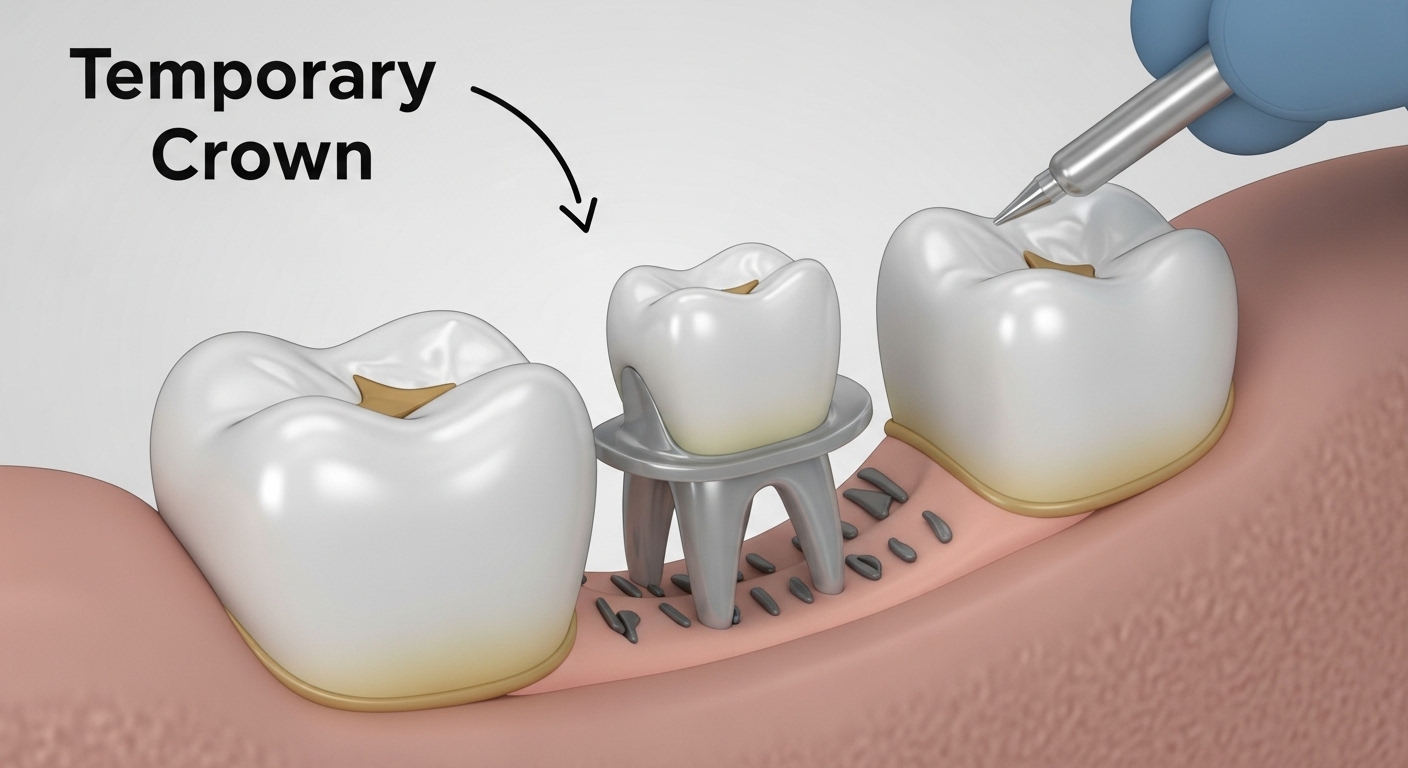
4. Temporary crown placement
A temporary crown protects the tooth while the permanent crown is fabricated in a dental laboratory.
5. Crown fitting and cementation
At the second visit, the dentist checks fit, colour, and bite before permanently bonding the crown.
Most patients complete treatment within two appointments, though some clinics offer same day crowns using digital technology.
Dental Crown vs Filling
Quick Answer
A filling repairs small to moderate decay, while a crown covers the entire tooth and provides greater strength.
Comparison Table
| Feature | Filling | Dental Crown |
| Coverage | Partial tooth | Entire tooth |
| Strength | Moderate | High |
| Longevity | 5 to 10 years | 10 to 15 years or longer |
| Cost | Lower upfront | Higher upfront |
| Best for | Small cavities | Large damage or cracks |
Dentists often recommend crowns when more than half of the tooth structure is compromised.
Types of Dental Crowns
Different materials suit different clinical and cosmetic needs.
Porcelain or ceramic crowns
Best for front teeth due to their natural appearance.
Zirconia crowns
Extremely strong and aesthetically pleasing, suitable for back teeth and high bite pressure.
Porcelain fused to metal
Combines strength and appearance but may show a metal margin over time.
Gold or metal crowns
Very durable but less commonly chosen due to appearance.
Your dentist will recommend a material based on tooth location, bite forces, and cosmetic expectations.
Benefits of a Dental Cap Crown
Quick Answer
Dental crowns restore strength, protect teeth, and improve appearance.
Key Benefits
Long lasting protection
Crowns shield teeth from fractures and further decay.
Improved chewing ability
A damaged tooth restored with a crown can function normally again.
Natural appearance
Modern materials closely match the colour and translucency of natural teeth.
Preservation of natural teeth
Crowns allow dentists to save teeth that might otherwise require extraction.
How Long Do Dental Crowns Last?
Quick Answer
Most dental crowns last between 10 and 15 years, but many last longer with proper care.
Factors That Affect Longevity
-
Oral hygiene habits
-
Teeth grinding or clenching
-
Diet and chewing habits
-
Regular dental checkups
Brushing twice daily, flossing, and attending routine dental visits help extend the lifespan of crowns.
Dental Crown Cost in Australia
Quick Answer
The cost of a dental crown in Australia typically ranges from AUD 1200 to AUD 2500 per tooth depending on material and complexity.
Factors That Influence Cost
-
Crown material
-
Laboratory fees
-
Location of the clinic
-
Additional procedures such as root canal therapy
Private health insurance may cover part of the cost depending on your policy.
For personalised advice and a detailed quote, you can contact the Tooth Heaven team.
What Is the Cheapest Way to Replace a Crown?
Quick Answer
The most affordable option is often replacing the crown with a similar material rather than upgrading to premium ceramics, but suitability depends on the tooth and bite.
Your dentist will balance cost with durability and long term outcomes to ensure value for money.
Risks and Considerations
Dental crowns are highly successful, but patients should be aware of potential issues:
-
Temporary sensitivity after placement
-
Rare risk of crown loosening or chipping
-
Gum irritation if oral hygiene is poor
Regular dental reviews help detect and resolve any issues early.
Real World Example
A common scenario involves a patient who fractures a molar after biting on hard food. The tooth may still be viable but weakened. After assessment, the dentist performs a root canal and places a zirconia crown, restoring both strength and chewing function.
Cases like this highlight how crowns allow patients to keep their natural teeth rather than opting for extraction and replacement.
Quick Answers to Common Questions
Is a dental cap the same as a crown?
Yes. Dental cap and dental crown are two terms for the same restoration that covers and protects a tooth.
How long does a crown cap last?
Most crowns last 10 to 15 years, and many last longer with good oral care and regular dental visits.
How much is one crown in Australia?
The average cost ranges from AUD 1200 to AUD 2500 depending on material and complexity.
How much does a crown cap cost?
Costs vary based on material, laboratory work, and case complexity, but most patients fall within the typical Australian price range.
What is the cost of a crown in Australia?
Dental crown costs generally range from AUD 1200 to AUD 2500, though insurance and treatment needs may affect final pricing.
Why Choose an Experienced Dental Team?
Successful crown treatment depends on accurate diagnosis, precise preparation, and high quality laboratory work.
At Tooth Heaven, treatment is planned by experienced clinicians who focus on both function and aesthetics.
For general information about services and patient care philosophy, visit the main website.
Conclusion
A dental cap crown is one of the most reliable ways to restore a damaged or weakened tooth. It protects the remaining structure, improves appearance, and restores normal chewing function.
Understanding what a dental crown is used for, when you may need one, and what the procedure involves can help you make confident decisions about your oral health.
If you think you may need a crown or want personalised advice, contact the Tooth Heaven team to book a consultation and discuss your treatment options.