
Introduction
Many patients wonder about the dental cap vs dental crown debate, and whether there is any difference between the two. Simply put, a dental cap and a dental crown refer to the same restorative procedure, a custom-made covering placed over a damaged or weakened tooth to restore function, appearance, and strength. While the terms are often used interchangeably, understanding nuances, alternatives, and when each is needed can help patients make informed decisions.
In this comprehensive guide, we will explain the difference between a dental cap and a crown, compare crowns to veneers and fillings, explore when a dental crown is needed, and provide insights on materials, procedures, risks, and costs. By the end, you’ll know exactly which option is suitable for your tooth restoration needs.
What Is a Dental Cap and What Is a Dental Crown?
Quick Answer
A dental cap is another term for a dental crown, a protective cover that restores a tooth’s function, strength, and appearance.
-
Dental Crown: Used primarily for restorative purposes after decay, fractures, or root canal treatment.
-
Dental Cap: A more casual term, often used by patients and some dentists, for the same procedure.
Both terms are interchangeable in modern dentistry. However, patient communication and dental records usually use “crown” in clinical contexts.
Difference Between Dental Cap and Crown
Quick Answer
Functionally, there is no difference—they are two names for the same treatment.
Key Points:
-
Terminology: “Cap” is commonly used in casual conversation, “crown” is professional terminology.
-
Materials and Types: Both terms refer to porcelain, zirconia, metal, or porcelain-fused-to-metal restorations.
-
Indications: Same indications for tooth protection, cosmetic enhancement, or implant coverage.
For patients considering cosmetic improvements alongside restorations, crowns are often part of broader cosmetic dentistry solutions.
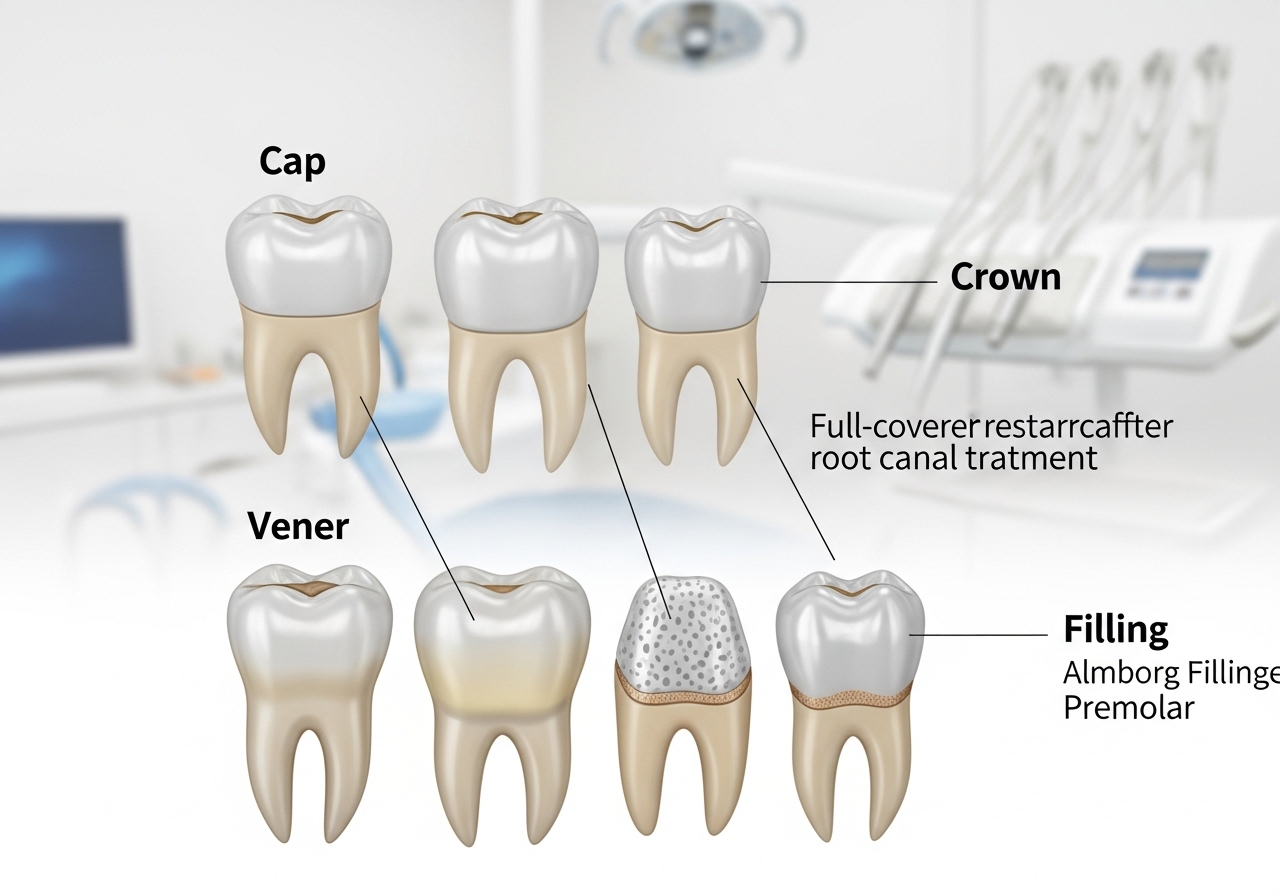
Dental Crown vs Veneer vs Filling
Quick Answer
-
Dental Crown (Cap): Covers the entire tooth for strength and protection.
-
Veneer: Thin shell covering only the front surface for cosmetic improvement.
-
Filling: Repairs minor cavities or damage without covering the entire tooth.
When to Use Each:
| Restoration | Best For | Key Considerations |
| Crown/Cap | Severely decayed, cracked, or post-root canal teeth | Strong, long-lasting, full coverage |
| Veneer | Cosmetic enhancements, minor shape/color issues | Minimal tooth reduction, front teeth only |
| Filling | Small cavities or cracks | Preserves most natural tooth structure, less expensive |
When Is a Dental Crown Needed?
Quick Answer
A dental crown is recommended when a tooth is too damaged to be restored with a filling alone.
Common Scenarios:
-
Large decay that compromises structural integrity
-
Fractured or cracked teeth
-
After root canal therapy
-
Worn teeth due to grinding (bruxism)
-
Cosmetic improvement of discoloured or misshapen teeth
Materials Used for Dental Crowns
Quick Answer
Crowns (caps) can be made from various materials, each suited for different teeth and needs:
1. Porcelain Crowns
-
Highly aesthetic, ideal for front teeth
-
Cost: AUD 1500–2300 per tooth
2. Zirconia Crowns
-
Strong and durable, suitable for molars
-
Cost: AUD 1600–2500 per tooth
3. Porcelain-Fused-to-Metal (PFM) Crowns
-
Combines strength and aesthetics
-
Cost: AUD 1300–2000 per tooth
4. Metal Crowns
-
Very durable but less aesthetic
-
Cost: AUD 1400–2200 per tooth
Australian dental clinics use high-quality materials and precise laboratory processes to ensure long-lasting and natural results.
Dental Cap Procedure Steps
Quick Answer
The crown procedure usually involves two visits and is minimally invasive with modern techniques.
Step-by-Step:
-
Consultation and Examination: Assessment of tooth condition with X-rays
-
Tooth Preparation: Shaping the tooth to fit the crown
-
Impression or Digital Scan: Accurate model of the tooth
-
Temporary Crown Placement: Protects the tooth while the final crown is fabricated
-
Final Crown Placement: Permanent cementation and bite adjustment
Patients usually experience minimal discomfort, and normal eating and speaking can resume shortly after treatment.
Problems and Risks After Getting a Crown
Quick Answer
While crowns are safe and effective, complications can occur:
-
Sensitivity: Often temporary after placement
-
Crown Loosening or Falling Off: Due to cement failure or decay
-
Cracks or Chips: More common with porcelain, preventable with care
-
Gum Irritation or Recession: Can expose crown margins
-
Allergic Reactions: Rare, usually to metal components
Proper oral hygiene and routine check-ups can prevent or minimise these issues.
How Long Do Dental Crowns Last?
Quick Answer
Most crowns last 10–15 years, though many last 20 years or more with proper care.
Tips to Extend Lifespan:
-
Brush and floss daily
-
Avoid biting hard objects (ice, hard candy)
-
Wear a nightguard if you grind your teeth
-
Attend regular dental checkups
Real World Example
A patient had a severely decayed front tooth. The dentist recommended a porcelain crown (cap) for strength and aesthetics. After preparation, digital scanning, and placement, the crown restored the tooth’s function and appearance. The patient maintained excellent oral hygiene and regular dental visits, and the crown lasted over 12 years without any issues.
This highlights the importance of proper material selection, experienced clinicians, and preventive care.
Quick Answers to Common Questions
Is a dental cap the same as a crown?
Yes, both terms refer to the same restorative treatment.
Dental cap vs dental crown – which is stronger?
Strength depends on the material (zirconia and metal crowns are strongest).
Crown vs veneer vs filling – which should I choose?
Choose crowns for full tooth coverage, veneers for cosmetic front teeth, and fillings for minor cavities.
When is a dental crown needed?
Recommended for teeth with extensive decay, fractures, after root canal, or cosmetic improvements.
How long do dental crowns last?
Typically 10–15 years, with proper care and maintenance.
Why Experience Matters When Choosing a Crown
Dental crowns are technique-sensitive. Proper tooth preparation, crown fabrication, and placement are critical for longevity, comfort, and aesthetics.
At Tooth Heaven, our clinicians combine experience with high-quality materials and advanced dental technology to provide reliable, natural-looking restorations.
For personalised advice or to schedule a consultation, visit Tooth Heaven and book your appointment today.
Conclusion
Understanding the dental cap vs dental crown concept ensures patients make informed choices for tooth restoration. While the terms are interchangeable, knowing the differences between crowns, veneers, and fillings, as well as when a crown is needed, can guide treatment planning.
Selecting the right material, working with an experienced dental team, and following preventive care practices ensures your crown lasts for many years while restoring both function and aesthetics.
For expert guidance on which dental restoration is best for your smile, contact the Tooth Heaven team to book a consultation.